Organic wine production is not merely a passing trend—it is a step towards a more sustainable future for winemaking, one that respects nature while highlighting the wine’s authenticity and distinctive character.
Good wine doesn't start in the cellar. It starts in the soil.
Healthy soil is a living ecosystem—home to billions of bacteria, fungi and other microorganisms that break down organic matter and release minerals the vine’s roots would otherwise be unable to access.
When a vine sends its roots deep into such soil, it absorbs the character of that place, mineral by mineral. This is what we call terroir—and it cannot be added in the cellar.
Terroir only expresses itself if we let it.
Every vineyard in the world is unique. Different soils, slopes, altitudes, climates, winds — all of these affect the grapes. Organic farming is fundamentally a decision to step back and let nature do its thing.
Organic winemaking is not a sacrifice or a compromise — it is a decision to let nature speak. Healthy, living soil gives wine a minerality and character that cannot be added in the cellar. Less chemistry in the vineyard means more terroir in the glass. And terroir — the soil, the climate, the wind, the location — is what makes a wine unique.
Less intervention, more character
The organic approach doesn't stop at the vineyard. The point is in the integrity: naturally grown grapes deserve a natural approach all the way to the bottle.
Spontaneous fermentations with native, natural yeasts — those that live on the grape skins and in the cellar air — give the wine a complexity that cannot be achieved with industrial yeasts. Maceration, maturation in wooden barrels, bottling without filtration and with minimal sulfite content allow the wine to remain as it is. Each vintage is an expression of that year — not a formula that repeats itself.
The wine produced in this way is not merely organic. It is authentic.
Long-term investment
Organic farming requires more work, more observation, and more patience. It also requires trust — in nature, in the place, in a process that is not always predictable.
But the land we cultivate today will bear fruit tomorrow. Vineyards that we cultivate without chemicals become more resilient, more balanced, more drought-tolerant, more able to express the place over the years. This is not an investment in one season. It is an investment in everything that comes after us.
And that's exactly why the best winemakers in the world — those who think in generations, not in vintages — choose organic production. Not because it's fashionable. Because it's the only one that makes sense in the long run.
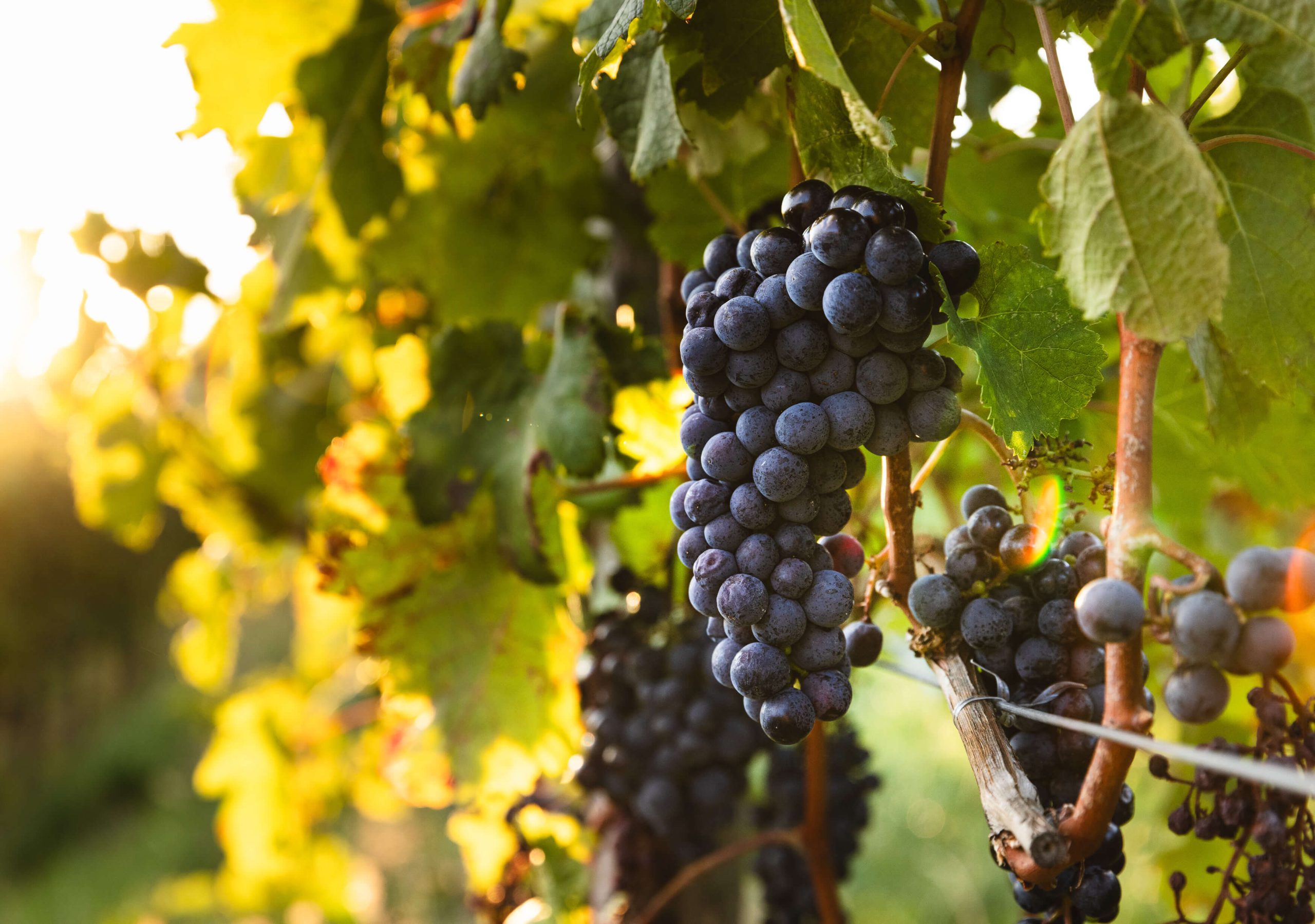
Grapes in full ripeness — the result of small harvests and patient work in the vineyard.